
Ngorongoro Crater 1 Day Trip Safari Tanzania (0500 Hours -1930 Hours)
Ngorongoro Crater, 1 Day Trip Safari Tanzania is a full-day wildlife safari from Arusha to the world-famous Ngorongoro Crater, also known as Africa’s Garden of Eden. The crater is located 180 km west of Arusha town.
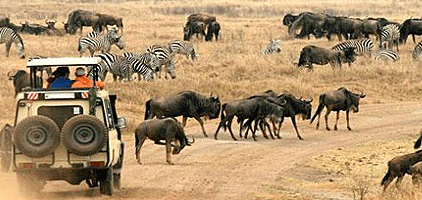
The diverse habitats found on the fertile crater floor support a variety of wildlife, including elephants, monkeys, hyenas, jackals, and herds of zebra, wildebeest, buffalo, and other antelope species.
The Ngorongoro Crater hosts the Big Five of Africa, boasting one of the highest concentrations of lions in the world. Almost all of the wild animal species found on the savannahs of East Africa are represented in this compact crater.
Wildlife Species include
✓ Predators: High concentrations of lions, spotted hyenas, jackals, and servals
✓ Herbivores: Large herds of wildebeest, zebra, eland, Grant’s and Thomson’s gazelles, plus waterbucks and warthogs
✓ Unique Absence: Giraffes are generally not found inside the crater due to steep terrain, although they are common on the rim
✓ The “Big 5”: Excellent opportunities to see lion, black rhino, elephant, buffalo, and leopard, with black rhino being a major attraction
✓ Birdlife: Over 500 species reside here, including thousands of flamingos on Lake Magadi and large birds like ostriches and kori bustards
Ngorongoro Crater offers first-class game viewing and is considered one of the best places to photograph the endangered black rhino. It also serves as a sanctuary for the endangered black rhino, thanks to its steep walls, which form a natural barrier against potential poachers.
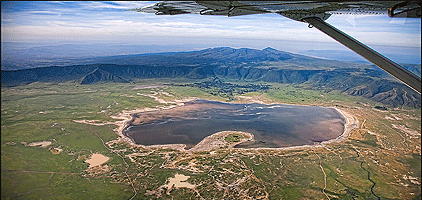
The swamps on the crater floor are home to many hippos, which are a breathtaking sight from the picnic spots. Lake Magadi is a salt pan that attracts many birds, the most notable of which is the flamingo.
The crater rim, where the lodges and the tented camps are, stands at 7216 feet (2200 meters) above sea level, and 610 feet above the floor of the crater. The floor of the crater, which is slightly oval in shape, is 278 square kilometers (100 square miles).
The ever-changing weather patterns provide a dramatic backdrop to the scenery and wildlife.
Ngorongoro Crater, 1 Day Trip Safari Tanzania from Arusha/ Moshi Itinerary
0500 Hours – 0600 Hours: Pickup from your hotel in Arusha/Moshi and drive to the Ngorongoro Conservation Area with packed lunch boxes.
0900 Hours – 0930 Hours: Arrive at the Loduare Main Gate for registration formalities
0930 Hours – 1000 Hours: Drive to the Crater Rim for a panoramic view and descent into the caldera
1000 Hours – 1300 Hours: Morning game drive on the crater floor, targeting the Big Five (lions, elephants, rhinos, buffalo, leopards)
1300 Hours – 1400 Hours: Picnic lunch at the Ngoitokok Swamp hippo pool or another designated site
1400 Hours – 1530 Hours: Afternoon game drive, exploring Lake Magadi for flamingos and seeking out remaining wildlife
1530 Hours – 1600 Hours: Begin the ascent and depart the crater
1600 Hours – 1900 Hours: Drive back to Arusha/Moshi, arriving in the evening
Ngorongoro Crater, 1 Day Trip Safari Tanzania is a full-day wildlife safari from Arusha to the world-famous Ngorongoro Crater, also known as Africa’s Garden of Eden. The crater is located 180 km west of Arusha town.
A day-trip safari to Ngorongoro Crater won’t disappoint, as the wildlife drives on the crater floor offer the easiest, best, and most rewarding game viewing in East Africa.
The diverse habitats found on the fertile crater floor support a variety of wildlife, including elephants, monkeys, hyenas, jackals, and herds of zebra, wildebeest, buffalo, and other antelope species.
The Ngorongoro Crater hosts the Big Five of Africa, boasting one of the highest concentrations of lions in the world. Almost all of the wild animal species found on the savannahs of East Africa are represented in this compact crater.
Ngorongoro Crater offers first-class game viewing and is considered one of the best places to photograph the endangered black rhino. It also serves as a sanctuary for the endangered black rhino, thanks to its steep walls, which form a natural barrier against potential poachers.
The swamps on the crater floor are home to many hippos, which are a breathtaking sight from the picnic spots. Lake Magadi is a salt pan that attracts many birds, the most notable being the flamingo.
The crater rim, where the lodges and the tented camps are, stands at 7216 feet (2200 meters) above sea level, and 610 feet above the floor of the crater.
The floor of the crater, which is slightly oval in shape, is 278 square kilometers (100 square miles). The ever-changing weather patterns provide a dramatic backdrop to the scenery and wildlife.
Ngorongoro Crater 1 Day Trip Safari Tanzania Detailed Itinerary
0500 Hours: Our Ngorongoro Crater 1-Day Trip Safari Tanzania departs from Arusha town with a picnic lunch box from your hotel and drives to Ngorongoro Crater. The crater lies 75 miles (120 km) west of the town of Arusha.
The driving time is 3 ½ hours. Today, you will descend 2000 feet (over 600 meters) to the crater’s floor for a half-day crater tour.
0930 Hours: Explore the forest areas that monkeys and elephants inhabit, and the lake area, where you may see the flamingos.
The open Savannah is home to populations of Lions, Leopards, and hyenas, along with large herds of wildebeest, buffalo, and zebra.
Other wildlife in Ngorongoro includes serval cats, cheetahs, jackals, Grant’s and Thompson’s gazelles, flamingos, and bat-eared foxes, as well as approximately 400 bird species.
1300 Hours: Picnic Lunch in the Crater at a picnic site with great views of the marshes, hippos, and birds. Ngorongoro Crater is nicknamed the “Eighth Wonder of the World,” and for good reason.
Here, an amazing panorama unfolds, a collapsed volcano spanning 102 miles, home to lions, rhinos, hippos, hyenas, and antelopes by the thousand. We will explore this wildlife wonderland in our exclusive-use four-wheel-drive vehicles, ideal for game viewing in this environment.
1530 Hours: Depart the Ngorongoro Crater with a Game drive en route to Arusha, arriving
2000 Hours: Arrive back in Arusha and transfer you to your hotel/residence.
Ngorongoro Crater 1 Day Trip Safari Tanzania Prices
Ngorongoro Crater 1 Day Trip Safari Tanzania Rates Include
✓ Picnic Lunch
✓ Government taxes
✓ Game drives as per the Itinerary
✓ Park entrance fees into the Ngorongoro Crater
✓4×4 Safari vehicle with pop-up roof for game viewing
✓ Crater fee for the safari vehicle, driver allowances, and park fees
✓Service of an English-speaking professional African Spice Safaris driver guide
✓ Round-trip transport from Arusha to the Ngorongoro Crater and back to Arusha
| Dates From | Dates To | Price Per Person | Children Aged 3 to 11 Years |
|---|---|---|---|
| 1st January 2026 | 31st December 2026 | Request for rates | Request for rates |
Notes
* Departures from other areas outside Arusha can be arranged. Kindly inquire
* Guides available speak English, French, Italian, and Spanish. Must be pre-booked at the time of booking
Ngorongoro Crater 1-Day Trip Safari Tanzania Rates Do Not Include
* Drinks
* Tips or gratuity
* Travelers Insurance
* Communication charges
* Visas, international airfares, and airport taxes; meals
* Personal expenses such as transfers to/ from the airport (supplement airport transfer cost applies for tours starting from the airport)
Ngorongoro Crater Information
Why Visit the Ngorongoro Crater?
Often referred to as the ‘Garden of Eden,’ the Ngorongoro Crater is home to almost 30,000 animals, including the Big 5 of Africa. Surrounded by the crater walls, spotting wildlife on Ngorongoro Crater safaris is remarkably easy!
This ancient volcanic caldera offers incredible wildlife encounters in a compact setting. Within the crater are grasslands, fever tree forests, and a soda lake. Home to the Big 5 animals, the Ngorongoro Crater is among the best places in East Africa to see black rhinos.
The Wildlife of Ngorongoro. At only 264 km² (101 mi²), the Ngorongoro Crater supports astonishing species diversity. The world’s largest intact caldera is home to zebras, wildebeests, eland, hippos, and giraffes that frequent the open grasslands and shelter in the acacia forests.
In addition to the herbivores, Ngorongoro Crater is home to large predators such as lions, spotted hyenas, cheetahs, and leopards, as well as smaller species such as bat-eared foxes, jackals, and servals.
The birdlife in Ngorongoro boasts over 500 species, including secretary birds, sunbirds, and lesser flamingoes. From October to December, these birds colour the soda lake pink. Migratory birds are also present from November to April. Though not the biggest wildlife park, Ngorongoro Crater is a top natural wonder that boasts some of Africa’s most exceptional (and easiest) game viewing.
Beyond the Crater
The Ngorongoro Crater is just one feature of the larger Ngorongoro Conservation Area. Part of Tanzania’s rich Northern Safari Circuit – Tarangire, the Serengeti, and Lake Manyara – the Ngorongoro Conservation Area is brimming with amazing sights.
Step back in time with our earliest ancestors in Olduvai Gorge, a UNESCO World Heritage Site, and Laetoli, where 3.6-million-year-old hominid footprints have been preserved in volcanic ash.
For an interesting day trip, hike to the Olmoti and Empakaai Craters. These extinct volcanoes contain soda lakes, waterfalls, lush woods, and flamingoes. Close to the Olduvai Gorge, the black volcanic dunes of the ‘Shifting Sands’ drift slowly across the plains.
The Gol Mountains and Nasera Rock, rich in culture and tradition, are important Maasai cultural heritage sites. Visit the Ndutu Plains to see the calving season of the Great Migration. This is the southernmost section of the vast Serengeti ecosystem, where predators and newborns battle for survival.
Visiting the Ngorongoro Conservation Area is easy to add to safaris on Tanzania’s Northern Safari Circuit, as it is close to the Serengeti, Tarangire, and Lake Manyara.
When is The Best Time to Visit the Ngorongoro Crater?
The best time to visit Ngorongoro Crater is during the rainy season from April to May. Visiting during the rainy season means a quieter safari with fewer visitors, a lush green landscape, and excellent game viewing.
January to March
January marks the start of the Great Migration calving season in the Ndutu Plains. Thousands of calves are born in the southern Serengeti ecosystem on the Ndutu Plains, part of the Ngorongoro Conservation Area. Predators lie in wait, making this a great time to see lions and hyenas in action.
The calving season continues through February. Conditions remain dry before the long rains begin in late March.
April and May
By April, the crater has transformed into an emerald paradise. There are fewer tourists at this time, and travellers can take advantage of off-season rates. The rains and lush green landscape last through May. Because of the crater’s unique geography, game viewing remains excellent. Though the roads can be muddy now, the quieter atmosphere is worth it.
June to October
By June, the long rains had ended. Peak season had not yet started, and Ngorongoro was still relatively quiet. Peak safari season in Tanzania begins in July with the official start of the dry season, which runs from July to October.
Wildlife viewing on the Northern Safari Circuit is at its best throughout the dry season. This is also the most popular tie of the year, meaning more tourists and higher prices. Booking in advance is essential. By October, the land is parched, and the animals eagerly anticipate the start of the short rains.
November and December
The short rains fall from November to December. The landscape changes from brown to green again, and a host of migratory birds arrive to take advantage of the water and warmer weather. The rains at this time are short and do not adversely affect game drives.
Booking & Reservations, Ngorongoro Crater 1 Day Trip Safari Tanzania Contact
Mobile: +254-721-242-711
WhatsApp: +254-721-242-711
Reservations: +254 718-179-967
Email: [email protected]
Website: https://africanspicesafaris.com