
Mwaluganje Elephant Sanctuary | Kwale, Coastal Kenya | 45 km SW of Mombasa
Mwaluganje Elephant Sanctuary is a pioneering, community-owned conservation area spanning 60,000 acres in Kenya’s Kwale District, just a short drive from the coastal beaches of Mombasa and Diani. Nestled within the spectacular Shimba Hills Ecosystem, the sanctuary features a dramatic landscape of deep river valleys, forested hills, sheer cliffs, and dry baobab bushland.
The sanctuary serves as a vital, protected migratory corridor allowing elephants to move freely between the Mwaluganje Forest Reserve to the north and the Shimba Hills National Reserve to the south. It is one of only three coastal refuges for elephants in Kenya and protects a threatened lowland coastal forest rich in biodiversity, including 300-million-year-old Dinosaur Cycads and petrified wood.
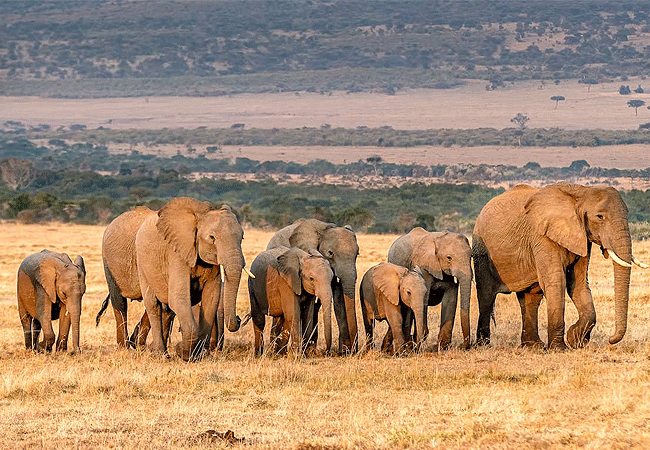
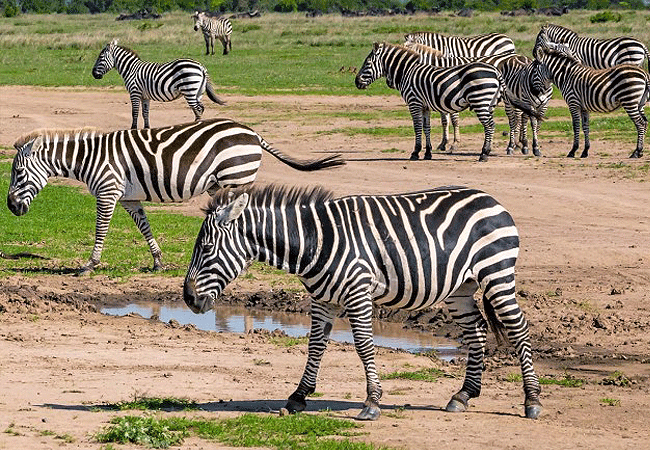
Home to a magnificent resident population of up to 150 elephants, predominantly large bulls, Mwaluganje also hosts spectacular seasonal family reunions where herds of up to 200 females and calves gather. Beyond elephants, the sanctuary supports zebras, warthogs, leopards, baboons, the endangered colobus monkey, and exceptional birdlife, including the rare Sokoke scops owl and the monkey-eating crowned eagle.
Mwaluganje is a shining, living example of community-driven eco-tourism. Established to resolve severe human-elephant conflicts, the sanctuary was created by over 200 local families from the Digo and Duruma tribes who voluntarily leased their land to it. Today, the community manages the land, earning a sustainable income from tourism, which funds local schools, better roads, clean water supplies, and innovative eco-projects such as elephant dung paper production.
How to Get There
By Road
✓ Travel Time: Less than an hour’s drive from the South Coast beach hotels
✓ Distance: Approximately 45–55 km southwest of Mombasa, and about 30 km from Diani Beach
✓ Conditions: A 4×4 vehicle is highly recommended for game drives within the sanctuary. Alternatively, visitors can easily reach the Chitsanze Gate by taxi or tuk-tuk for guided hikes
✓ Route from Mombasa: Take the Likoni Ferry south onto the Mombasa-Lunga Lunga Road. Drive 18 km, turn right at the Kombani Junction, and continue 16 km to Kwale Town. From Kwale, follow the signs to the sanctuary’s eastern Chitsanze Gate (approx. 6 km) or the western Main Gate (approx. 16 km)
By Air
✓ Local Airstrips: Private charter flights and helicopters can land at the small airstrip located within the adjacent Shimba Hills National Reserve
✓ Ukunda Airstrip (Diani): Daily scheduled domestic flights operate from Nairobi (Wilson Airport) to Ukunda. Flight time is approximately 1 hour. From Diani, the sanctuary is an easy 45-minute to 1-hour drive
✓ Moi International Airport (Mombasa): For international arrivals and larger domestic carriers, Mombasa is the primary hub. The drive from the airport to the sanctuary takes about 1.5 to 2 hours via the Likoni-Ukunda road or the new Dongo Kundu bypass
History
During the 1980s, the insatiable demand for ivory virtually annihilated the coastal elephant populations. A small number found refuge in the Shimba and Mwaluganje forests. As their numbers slowly recovered, farming activities in the area intensified, leading to severe human-elephant conflicts, habitat destruction, and tragic losses of life on both sides.
To resolve this crisis, the Mwaluganje Elephant Sanctuary was conceptualized in the early 1990s by the Kenya Wildlife Service (KWS). Through grassroots mobilization, local landowners agreed to halt deforestation and farming, and to relocate their homes outside a newly erected 25.5 km solar-powered fence.
The sanctuary was officially opened in 1995 by then-KWS Director Dr. David Western, marking the birth of Kenya’s first community wildlife sanctuary. The land is currently run by the Golini-Mwaluganje Community Wildlife Conservation Ltd.
Despite early success, the sanctuary faced difficult times due to the translocation of 150 elephants to Tsavo East in 2005, the 2007/08 national elections, and the Covid-19 pandemic, which forced the main gate to close. However, the sanctuary survived largely thanks to the Sheldrick Wildlife Trust (SWT), which continued to compensate landowners even in the absence of tourism revenue.
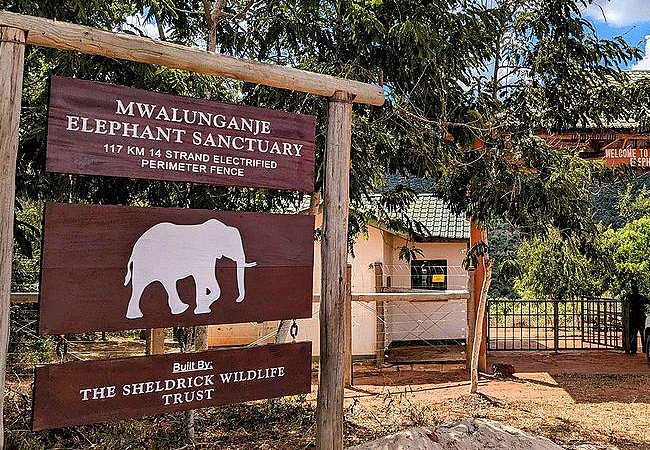
Today, Mwaluganje is experiencing a magical revival. In 2023/24, SWT completely re-fenced the 117 km ecosystem perimeter. Since 2025, stakeholders have rehabilitated hiking trails, repaired road networks, and introduced new herbivore populations, breathing fresh life into this historic community treasure.
Mwaluganje Elephant Sanctuary Entrance Fees
|
2026 Mwaluganje Elephant Sanctuary Entrance Fees |
|||
|
Citizen Rate Per Person Per Day |
Resident Rate Per Person Per Day |
Non-Resident Rate Per Person Per Day |
|
|
Adult |
200 Kenya Shillings |
500 Kenya Shillings |
1,000 Kenya Shillings |
Notes
* The sanctuary is operational between 0600 hours and 1900 hours
* To view our Mombasa Day Trip to Mwaluganje Elephant Sanctuary | Click Here
Mwaluganje Elephant Sanctuary Activities
Wildlife Viewing Experiences
✓ Diverse Ecosystem Spotting: Beyond elephants, keep your eyes peeled for the recently introduced zebras, alongside warthogs, waterbucks, and baboons. Deep in the forest, you can spot Sykes and endangered colobus monkeys, and if you are very lucky, elusive predators like leopards and mongooses
✓ Game Drives: Set out on a safari (4×4 recommended) across Mwaluganje’s 60,000 acres of dramatic cliffs, river valleys, and baobab-dotted bushlands. The sanctuary is historically a bull area, meaning you will frequently encounter massive, independent male elephants. If you visit during the rainy seasons (December, March, and April), you may witness breathtaking family reunions where up to 200 females and calves cross into the sanctuary from the Shimba Hills, filling the air with a symphony of trumpets and rumbles.
Nature-Based Guided Walks
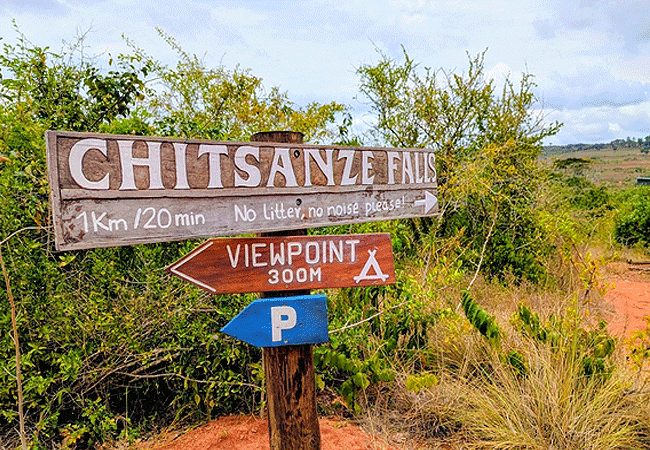
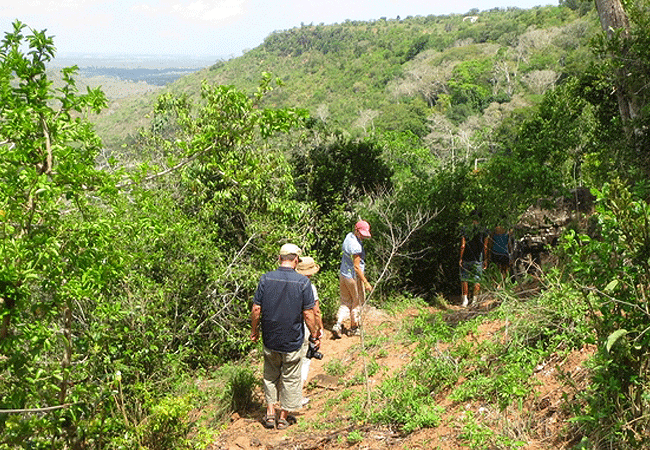
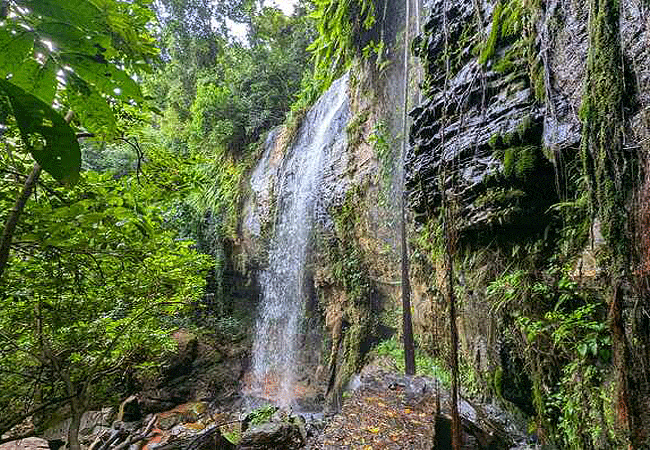
✓ Chitsanze Trail & Waterfall Hike: Join an armed ranger for a short, enchanted hike starting from the Chitsanze Gate on Golini Ridge. In less than half an hour, the trail leads you down into the valley to the hidden Chitsanze Waterfall. You can even take a refreshing shower under the cascading water dropping 13 meters from the cliff above
✓ Botanical & Birdwatching Safaris: Mwaluganje is a paradise for flora and avian enthusiasts. Walk among giant, ancient Baobab trees and 300-million-year-old Dinosaur Cycads that date back to the Jurassic period. Birdwatchers can look for spectacular birds of prey, including the monkey-eating crowned eagle, the palm nut vulture, and the highly rare indigenous Sokoke scops owl
Immersive Conservation & Community Experiences
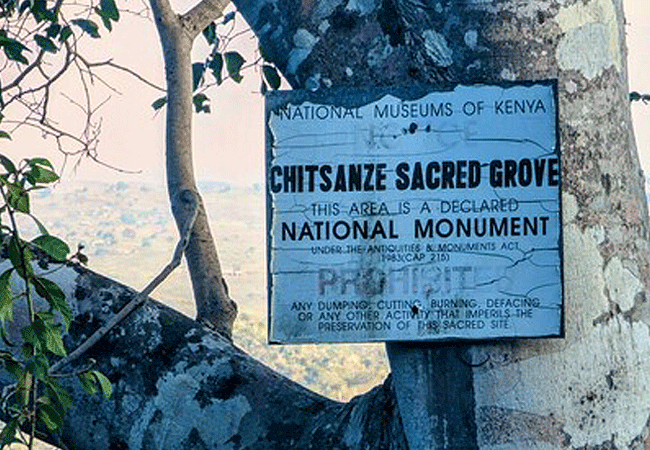
✓ Kaya Mtae Sacred Forest Visit: Step into a deeply cultural experience by visiting Kaya Mtae, a sacred Duruma settlement situated at the top of Mwaluganje Hill. Protected as a National Monument, this is a place where traditional spiritual leaders and elders still gather to pray and offer sacrifices. Visitors are guided respectfully through the area to understand the rich heritage and tribal magic of the coastal Mijikenda people.
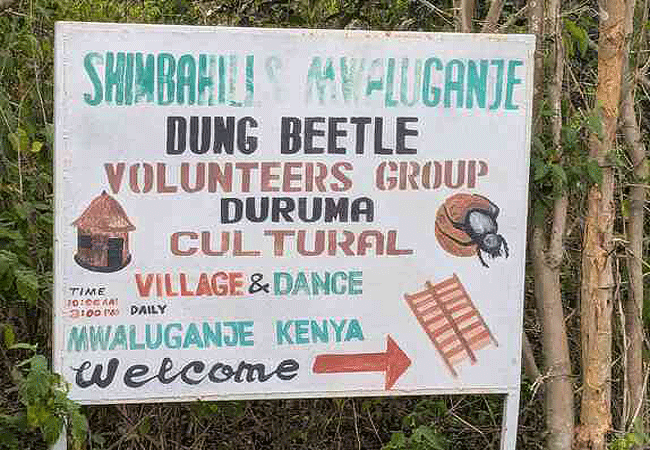
✓ Eco-Project Insights: Discover firsthand how Mwaluganje pioneers community eco-tourism. Learn about the innovative Elephant Dung Paper Project, where community members collect dung (often assisted by industrious dung beetles!) and process it into beautiful paper. You can also learn about the solar-fence initiatives and the Fire Brickette Project, which creates eco-friendly fuel to prevent deforestation and protect the community.
Unique Bush Experiences
✓ Manolo River & Geological Wonders: Explore the lifeline of the sanctuary, the Manolo River. Visit striking geological features like “God’s Bridge” (a natural rock bridge) and “Mawe ya Masaa” (Time Rock), a white cliff face near Daraja ya Mungu that local legends claim changes color from green in the morning to red in the evening
✓ Scenic Picnics & Sundowners: While there are no restaurants deep within the sanctuary, guests are encouraged to bring their own picnics. Enjoy a peaceful lunch or sundowner drinks at the secluded campsite near Chitsanze Gate, offering magnificent, uninterrupted views down into the Manolo valley and across the Shimba Hills ecosystem
Mwaluganje Elephant Sanctuary Wildlife
Wildlife & Biodiversity
Mwaluganje Elephant Sanctuary is a critical conservation area within the greater Shimba Hills ecosystem, forming a vital wildlife corridor that allows animals to move freely between the Mwaluganje Forest Reserve to the north and the Shimba Hills National Reserve to the south. Covering approximately 60,000 acres (with a core sanctuary area of 36 sq. km), Mwaluganje serves as one of only three coastal refuges for elephants in Kenya and protects a highly threatened lowland coastal forest.
The sanctuary’s incredibly diverse landscapes—ranging from dramatic cliffs and dry baobab bushlands to moist deciduous forested hills and riverine rainforests along the Manolo River—provide a sanctuary for a rich array of flora and fauna. This area is an important center of biodiversity, blending typical savannah species with those found in tropical rainforests, making it a truly unique ecological pocket just inland from the Indian Ocean.
Wildlife at Mwaluganje Elephant Sanctuary
Large Mammals
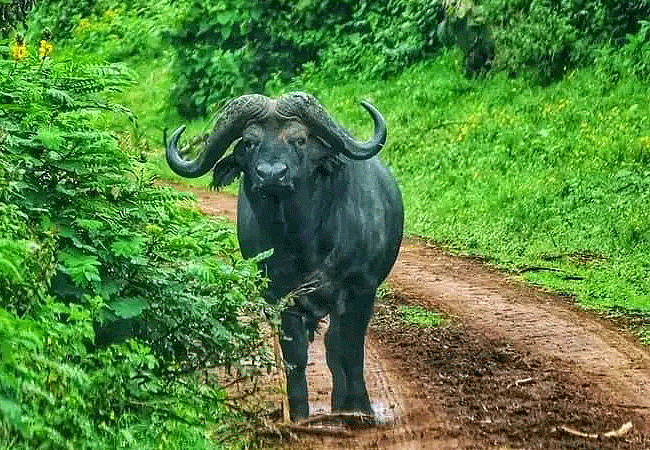
✓ Buffaloes: Often found near the Manolo River and throughout the forested plateau
✓ Bushbucks & Waterbucks: Common antelopes that thrive in the sanctuary’s mix of dense forest and riverine environments
✓ Zebras, Impalas, & Hartebeests: Recently introduced into the Shimba ecosystem as part of an ambitious KWS program to increase the grazer population, with giraffes and elands planned to follow
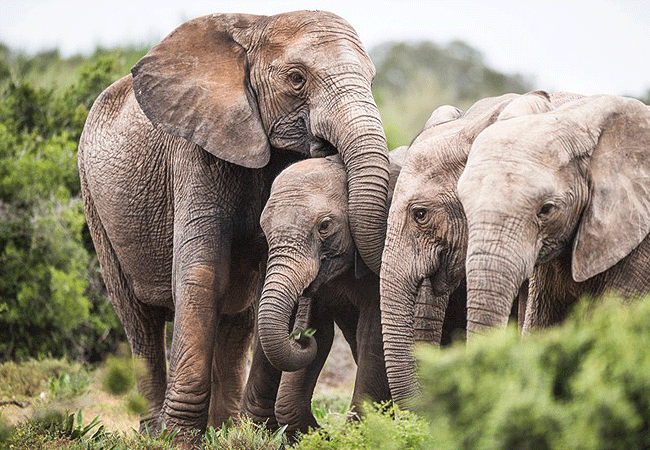
✓ African Elephants: The undeniable stars of the sanctuary. Historically, Mwaluganje has been a bull area, hosting about 150 independent males. During the rainy seasons (December, March, and April), incredible family reunions occur, drawing herds of up to 200 females and calves from the Shimba Hills
Big Cats & Predators
✓ Mongooses: Frequently seen darting through the underbrush on the hunt for insects and small reptiles
✓ Honey Badgers: Rare but present, these notoriously tough foragers roam the sanctuary’s diverse terrain
✓ Leopards: Elusive and solitary, these big cats use the dense forest cover and rocky cliffs to remain hidden, though lucky visitors may spot them
Other Mammals
✓ Baboons: Highly social primates that appear in large troops around the water sources and river valleys
✓ Warthogs: Commonly found grazing in the clearings, sometimes seen being playfully chased by young elephant calves
✓ Nocturnal & Small Mammals: The sanctuary is home to elusive species such as porcupines, bushbabies, and the fascinating elephant shrew
✓ Sykes & Colobus Monkeys: Deep in the forest, visitors can spot Sykes monkeys and the beautiful, endangered black-and-white Colobus monkeys moving through the canopy
Birdlife & Unique Flora
✓ Desert Roses: At the end of the rainy season (November), these stunning wildflowers bloom, turning the rocky cliffs a vibrant pink
✓ Giant Baobabs: Ancient, massive deciduous trees that store large quantities of water in their spongy trunks, providing food and shelter for many species
✓ Raptors: The sanctuary is a birdwatcher’s haven, boasting spectacular birds of prey, including the monkey-eating crowned eagle and the palm nut vulture
✓ Sokoke Scops Owl: Mwaluganje is exceptionally important for avian conservation, being one of only two sites in Kenya where you can encounter this rare, indigenous owl
✓ Dinosaur Cycads: An incredible botanical highlight. These fan-like plants (Eucephalartos hildebrantii) evolved around 300 million years ago during the Jurassic period and thrive in the protected sanctuary
Mwaluganje Elephant Sanctuary Accommodation
Mwaluganje Elephant Sanctuary offers a highly authentic, off-the-beaten-path camping experience within its borders, alongside a selection of outstanding lodges and retreats situated just outside the sanctuary along the Golini Ridge and within the adjacent Shimba Hills ecosystem. While the original privately-run Traveler’s Camp is currently closed as the sanctuary undergoes its magical revival (with exciting plans for a new in-sanctuary lodge on the horizon), visitors have excellent options for an immersive stay.
Chitsanze Gate Campsite
For adventurous travelers and nature lovers seeking a raw, authentic wilderness experience, the sanctuary offers a dedicated campsite near the eastern Chitsanze Gate. This secluded and shady spot provides a peaceful retreat under the coastal forest canopy with magnificent, uninterrupted views down into the Manolo River valley.
Because it is a true bush camp, guests must be fully self-sufficient and bring all their own supplies, including food, equipment, and drinking water.
Campsite Amenities & Details
✓ A traditional long-drop toilet
✓ Secluded, shaded pitches for private tents
✓ A unique, rustic “elephant shower” located at the gate area
✓ Firewood (provided by the sanctuary rangers upon request)
Guests can relax by the campfire at night and wake up to the sounds of the forest. Activities directly from the camp include guided hikes to the Chitsanze Waterfall, exploring the sacred Kaya Mtae forest, and enjoying spectacular, crowd-free birdwatching and sunrise views over the sanctuary.
Nearby Eco-Lodges & Retreats
For guests seeking comfort, luxury, or catered dining, the immediate area surrounding the sanctuary offers a variety of stunning eco-lodges and boutique houses. These properties sit perched on the ridges overlooking the sanctuary or tucked within the lush Shimba Hills, providing perfect bases for daily excursions into Mwaluganje.
Accommodation Options Include
✓ Shimba Hills Lodge: A long-standing, iconic treehouse-style eco-lodge nestled deep within the adjacent Shimba Hills National Reserve. It offers a classic, immersive forest safari experience, overlooking a waterhole that frequently attracts elephants and other wildlife.
✓ Shimba Green Lodge: Located high on the Golini Ridge, this lodge offers panoramic, sweeping views directly into the Mwaluganje Elephant Sanctuary. It is an ideal base for those who want a comfortable bed and catered meals while remaining just minutes from the sanctuary gates.
✓ Boutique Houses & Retreats: The surrounding “Champagne Ridge” and Kwale area host several other beautiful retreats, including Mandhari Lodge, Shimba House, Pumzika-tu!, Arcadia Cliff House, and Kutuzama Lodge. These properties ensure a wide range of options for every travel style, from luxury boutique stays to cozy guesthouses.
Booking & Reservations Mwaluganje Elephant Sanctuary Contact
Mobile: + 254-721-242-711
WhatsApp: +254-721-242-711
Reservations: +254 718-179-967
Email: [email protected]
Website: https://africanspicesafaris.com