
Nairobi National Museum Day Tour | Duration: 2–3 hours
Our Nairobi National Museum Day Tour usually takes 2–3 hours and covers the museum’s history, culture, and art, as well as the snake park. The museum is open between 0830 Hours and 1730 Hours.
The Museum is located on Museum Hill, only 20 minutes from the Central Business District, near Uhuru Highway, between the Central Business District and Westlands in Nairobi. It aims to interpret Kenya’s rich heritage and offers a one-stop destination for visitors to sample it, both for education and leisure.
The Kenya National Museum was opened in was officially opened on 22nd September 1930 and is a place for discovery, contemplation, and learning. Learn more about Kenyan Culture, History, Arts, and Nature by visiting the different galleries
Nairobi National Museum Galleries
✓ Cycles of Life Gallery: This ethnological space explores the cultural practices and social transitions within Kenyan communities. It follows a person’s journey through four major life stages: childhood, youth, adulthood, and ancestry. Visitors can see traditional items, charms, and attire related to birth rituals, initiation, and marriage.
✓ The History of Kenya: Spanning from pre-colonial times to the present, this gallery traces the country’s political and social evolution. It covers key events like the construction of the Kenya-Uganda Railway, the colonial era, the struggle for independence, and the emergence of modern Kenya
✓ The Story of Mammals: Also known as the Great Hall of Mammals, this gallery uses life-sized models and taxidermy specimens to explain mammalian biology. The exhibits are themed around evolution, movement, feeding habits, and defence mechanisms, featuring famous figures like the elephant Ahmed
✓ Numismatic Exhibition: Created in collaboration with the Central Bank of Kenya, this exhibit displays the history of trade and currency in East Africa. It showcases everything from early cowrie shells and salt bars to modern banknotes and digital banking technology
✓ The Cradle of Humankind Gallery: This gallery highlights Kenya’s global significance in human evolutionary history. It features a world-class collection of early human fossils, including the renowned Turkana Boy and various Stone Age tools that trace over 25 million years of ancestry
✓ Asian African Heritage Exhibition: This gallery focuses on the history and contributions of the Asian community in Kenya. It explores their arrival, their role in the country’s development (such as the railway construction), and their integration into Kenyan society as one of its recognised ethnic groups
Note: The museum is open year-round, Monday to Sunday, from 0830 Hours to 1730 Hours, including public holidays and weekends
Nairobi National Museum Day Tour (Museum & Snake Park) Itinerary
A comprehensive day tour itinerary includes a 0900 Hours hotel pickup, 2 hours exploring the museum, a visit to the Snake Park, and optional nearby attractions.
0900 Hours: Pick up from hotel/residence within the Nairobi Central Business District
0930 Hours – 1130 Hours: Explore the Main Museum Gallery (Hall of Kenya, Cradle of Humanity, mammals, birds)
1130 Hours – 1230 Hours: Visit the Snake Park and Botanical Gardens
1230 Hours – 1330 Hours: Lunch at the on-site cafe or nearby area
Karen Blixen Museum, Nairobi Gallery, Nairobi National Museum & Snake Park Full Day Tour
0930 Hours – 1130 Hours: Karen Blixen Museum
1200 Hours – 1300 Hours: Nairobi Gallery
1300 Hours – 1430 Hours: Lunch at Museum Hill
1430 Hours – 1700 Hours: Nairobi National Museum & Snake Park
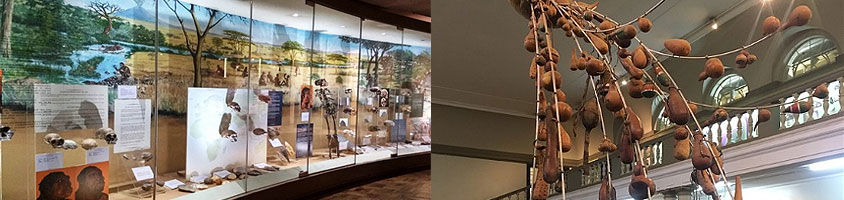
Nairobi National Museum Day Tour visits the Nairobi National Museum, located at Museum Hill, approximately a 10-minute drive from the Nairobi City Centre along Museum Hill Road off Uhuru Highway, in the Westlands area of Nairobi City, and is easy to reach.
It houses some of the most celebrated collections of History, Culture, and Art from Kenya and East Africa. The museum aims to interpret Kenya’s heritage to stimulate appreciation and learning. The Nairobi National Museum tour lasts about 2 hours and is a great eye-opener into Kenya’s culture & history.
This museum interprets Kenyan heritage to stimulate learning and appreciation. Nairobi Museum is a huge facility with many educational sections, which is the best educational centre, and one can easily spend all day here. There is a guide in the entryway that provides all the information on each section of the museum.
Upstairs in the people section, there are displays of the cultures of various Kenyan tribes. Also, the museum contains dinosaur fossils found in Kenya. Within the museum, there is a cafe/restaurant with a large balcony that offers a great, breathtaking jungle view. It also has touristy shops selling local handmade jewellery, African artefacts, and souvenir items.
There is an enormous dinosaur statue right at the museum entrance, which is always a hit with children. Another major tourist attraction within the grounds is Snake Park, which has just been refurbished.
Nairobi National Museum, Kenya’s leading house of culture, has introduced Night Guided Tours for individuals and groups of 10 or more people. The tours can be conducted between 1800 hours and 2200 hours. The Museum will be open between 6:00 pm and 10:00 pm, except during privately held functions.
Booking has to be made in advance through African Spice Safaris
Nairobi National Museum Day Tour Highlights
The Hall of Kenya: It is dedicated to highlighting the country’s unique tangible and intangible heritage. In this gallery, Kenya’s nature, culture, and history meet. The objects on display are a testimony to the country’s diverse and rich heritage.
The Joy Adamson Gallery: Joy Adamson (1910–1980) was an illustrator, conservationist, and author. Joy Adamson is perhaps most famous for the incredible story of Elsa the Lioness, immortalised in the book Born Free. Joy Adamson put the spotlight on the need to conserve African wildlife and sparked the creation of Kenya’s national parks.
The Cycles of Life: Life amongst Kenyan communities is filtered through different stages. From birth, through youth, to old age, death, and transition into ancestry. This gallery samples cultural practices from Kenya’s communities associated with these different stages in life. There is a wealth of material and intangible cultural heritage to be appreciated in this gallery. All information on display here can be found in the Cultural Anthropology department at the museum.
Birds of East Africa: They came from far and wide, in all colours and sizes, from the most primitive to the most advanced, and found a home in the Birds of East Africa gallery, showcasing the rich diversity of birds in the region. The Osteology section in the Zoology department keeps all the information showcased here.
The Great Hall of Mammals traces the development of mammals over time, focusing on their adaptations for movement, feeding, and protection. The gallery confronts the visitor with points of both congruence and divergence in the makeup of the mammalian world.
Ahmed the Elephant: Perhaps the most famous elephant in the world, Ahmed was known for his large tusks and was put under 24-hour protection in Marsabit National Park by Kenya’s first president, Kenyatta. Ahmed’s skeleton, with the original tusks, can be found in The Great Hall of Mammals inside the museum.
The Cradle of Mankind: A unique collection that points to Kenya as the cradle of humankind is on display in this gallery. The gallery traces human existence as evidenced by fossil findings across Kenya. All information, artefacts (fossils), and research can be accessed through the museum’s Earth Sciences department.
Temporary exhibitions: The museum’s temporary galleries highlight some of the most exciting contemporary artists and aspects of Kenya and Africa. The Museum extends services to individuals and institutions that wish to exhibit any information they deem important. A great example is the Central Bank of Kenya (CBK), which created an exhibition on the Kenya shilling’s evolving history, dubbed ‘the Numismatic Exhibition’.
Nairobi National Museum Day Tour Prices
Nairobi National Museum Day Tour Rates Include
✓ Professional English-speaking guides
✓ All entry fees, service charges, and taxes
✓ Visit Nairobi National Museum & Snake Park
✓ Pickup from your hotel in Nairobi and drop off at your hotel
| Dates From | Dates To | Price Per Person | Children Aged 3 to 11 Years |
|---|---|---|---|
| 1st January 2026 | 31st December 2026 | Request for rates | Request for rates |
Notes
* This museum is Open Daily (including public holidays) from 0930 hours to 1800 Hours. Night Tours are now Available!
* This tour departs daily from Nairobi Hotels or Jomo Kenyatta International Airport at 0900 Hours or from any point within Nairobi
Nairobi National Museum Day Tour Rates Exclude
* Drinks
* Tips or gratuity
* Travellers Insurance
* Communication charges
* Minimum of two persons required
* Visas, international airfares, and airport taxes; meals
* Sightseeing not included in the package; optional activities
* Personal expenses such as transfers to/ from the airport (supplement airport transfer cost applies for tours starting from the airport)
Booking & Reservations Nairobi National Museum Day Tour Contact
Mobile: +254-721-242-711
WhatsApp: +254-721-242-711
Reservations: +254 718-179-967
Email: [email protected]
Website: https://africanspicesafaris.com