
Nairobi Slum Walking Day Tour Kibera | 6 km from the city centre | 700,000 People
Nairobi Slum Walking Day Tour Kibera takes you to Kibera, the friendliest slum in the world, located about 7 km from Nairobi’s city center. Experience a part of Nairobi that is unseen by most tourists.
Kibera means “forest,” and this is the largest slum in Nairobi, Kenya. Our Nairobi Slum Walking Day Tour in Kibera starts at 0900 Hours or 1400 Hours daily (we are flexible on timing upon request) and lasts about 3 hours.
Nairobi Kibera slum walking tours are a 3- to 4-hour guided, immersive experience into Africa’s largest urban slum. Led by residents, these tours, often booked through African Spice Safaris, highlight community resilience by visiting local schools, orphanages, bead factories, and the Toi market, with a focus on education and social projects rather than on poverty alone.
Nairobi Slum Walking Day Tour Kibera
✓ Details are confirmed upon booking and well before the tour. We pick you up from your hotel/ residence and take you to Adams Arcade, our starting point for the walk, located along Ngong Road. Here we meet our local guide, who was born, raised, and resides in the slum.
The guide will let you know what is appropriate and will guide photos, donations, etc. We begin our walk with the toy market nearby, the biggest second-hand market in Nairobi. By the end of our Nairobi Slum Walking Day Tour, Kibera, you will understand the cultural, geographical, political, and historical aspects of the slum.
Situated in Nairobi, Kenya, it consists of 12 main villages, including Kianda, Soweto, and Gatwekera. Kibera is the largest slum in Nairobi and the largest urban slum in Africa, with over 700,000 and 1 million people.
Key Details About Kibera
Location: Situated about 7 km from Nairobi’s city center.
Conditions: The area is characterized by extreme poverty, high-density shack housing, limited access to clean water, and poor sanitation.
Demographics: Estimates range from 250,000 to 700,000 residents, though some reports indicate up to 1 million.
Background: Originally a settlement for Nubian soldiers after World War I, it grew into a major informal settlement over the decades.
Infrastructure: Only about 20% of the area has electricity, and many residents live in 12ft x 12ft mud-walled shacks with corrugated tin roofs.
Nairobi Slum Walking Day Tour Kibera Highlights
✓ Impact: A portion of the proceeds often supports local community projects and initiatives
✓ Safety & Customization: Our tours are private, offering a more personalized experience
✓ Local Guides: Tours are typically led by people born and raised in Kibera, ensuring a safe, authentic, and respectful experience
✓ Itinerary Highlights: Visits to the (Toi Market), local (schools/orphanages), and the (railway line) that bisects the community
✓ Purpose: These tours aim to educate visitors on the (social and economic challenges), as well as the (community-led development initiatives) within Kibera
✓ Duration & Timing: Options include morning (0900 Hours) or afternoon (1400 Hours) slots, generally lasting about 3 hours, with some full-day options available
What to Expect
✓ Walking Tour: The tour involves walking along narrow, often unpaved paths in Kibera
✓ Interaction: Opportunities to interact with local artisans and residents, to learn about their daily lives and businesses
✓ Educational Insight: Learning about community-driven projects, such as recycling centers and women’s empowerment groups
A walking tour of Kibera, Nairobi’s largest informal settlement, offers a 3-hour immersive experience into the daily life, resilience, and community projects of its residents. Our tours are typically led by local guides born and raised in the slum, ensuring an authentic and respectful perspective
Nairobi Slum Walking Day Tour Kibera Itinerary
Toi Market: One of Nairobi’s largest open-air second-hand markets, known for its wide variety of clothing and household items
Bead & Craft Centers: Workshops like the Kibera Handicrafts Centre, where artisans upcycle materials like bones and brass to create jewelry
Biogas Center: An initiative that produces renewable energy from local waste, offering a panoramic view of the settlement
Community Projects: Visits to local schools, orphanages (e.g., Hope and Shine Center), and women’s empowerment organizations
Typical Home Visit: Many tours include a stop at a local home to learn about daily living conditions and domestic systems
Practical Information & Safety
Clothing: Wear closed-toe, sturdy walking shoes; the terrain is often uneven and may be muddy
Safety: Tours are conducted during daylight in safe public areas and are often accompanied by local security staff. It is highly advised to go with a reputable guide rather than exploring alone
Photography: Strictly follow your guide’s instructions. Always ask for permission before taking photos of people or homes
Etiquette: Avoid wearing flashy jewelry or carrying expensive electronics. If you wish to donate, it is better to provide tangible goods, such as school supplies or local crafts, rather than give cash to individuals

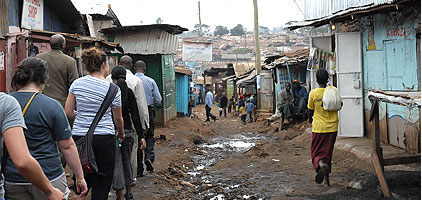
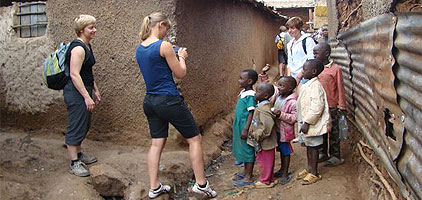
Nairobi Slum Walking Day Tour Kibera takes you to Kibera in Nairobi, the friendliest slum in the world. Experience a part of Nairobi that is unseen by most tourists. Kibera means “forest,” and this is the largest slum in Nairobi, Kenya.
Kibera Slum in Nairobi is roughly the same size as New York City’s Central Park, at about 1.5 square miles. With a population of over 1 million, Kibera has a population density 30 times that of New York City, and it lacks multi-level housing.
Most people living in Kibera have little or no access to basic necessities, such as electricity, clean water, toilet facilities, and sewage disposal. Nairobi Slum Walking Day Tour in Kibera offers a unique and interesting experience.
The residents of Kibera are very friendly and happy. You will definitely be impressed!” Our slum tours operate during the daytime and within safe public areas.
We have had ZERO incidents of injuries, harassment, or any complications.
Our Nairobi Slum Walking Day Tour in Kibera starts at 0900 Hours or 1400 Hours daily (we are flexible on timing upon request) and lasts about 3 hours.
Details are confirmed upon booking and well prior to the tour. We pick you up from your hotel/ residence and transport you to Adams Arcade, our starting point for the walk, located along Ngong Road.
Here we meet our local guide, who was born, raised, and resides in the slum. The guide will let you know what is appropriate and will provide guidance around photos, donations, etc.
We begin our walk at the Toy Market, the biggest second-hand market in Nairobi. By the end of our Nairobi Slum Walking Day Tour, Kibera, you will understand the cultural, geographical, political, and historical aspects of the slum.
Nairobi Slum Walking Day Tour Kibera Places of Intrest
* Kibera Slum’s main commercial areas and open-air markets
* An orphanage/ school built by ‘Mama Tunza’. Learn about her work at the children’s orphanage
* Visit inside a Typical Kibera-house. Learn how the locals live in the slum, their difficulties, and daily challenges
* A Bead Factory: Local Beadmaker using bones from the butchery. See and learn how these bones turned into beads
* The biogas Center: Learn how they produce biogas from raw materials such as agricultural waste, manure, municipal waste, plant material, sewage, green waste, or food waste
Nairobi Slum Walking Day Tour Kibera Prices
Nairobi Slum Tour Kibera Rates Include:
✓ Round-trip transportation from Nairobi/ Residence
✓ Restricted-picture policy: Pictures are allowed at dedicated places after permission from the guides
✓ The local guides and safety guards who are very well-known in Kibera and are even born and living in Kibera
| Dates From | Dates To | Price Per Person | Children Aged 3 to 11 Years |
|---|---|---|---|
| 1st January 2026 | 31st December 2026 | Request for rates | Request for rates |
Notes:
* Tours begin at 0900 Hours or 1400 Hours (we’re flexible on timing, just let us know), daily departing from your hotel or residence
Nairobi Slum Tour Kibera Rates Do Not Include
* Drinks
* Tips or gratuity
* Travelers Insurance
* Communication charges
* Minimum of 1 person required
* Visas, international airfares, and airport taxes; meals
* Sightseeing not included in the package; optional activities like the Naivasha Boat ride and lunch
* Personal expenses such as transfers to/ from the airport (supplement airport transfer cost applies for tours starting from the airport)
Nairobi Slum Walking Day Tour Kibera Requirements
* Enjoy your time and keep an open mind
* Avoid brightly colored or exposing clothing
* Keep photos to a minimum, and always ask for permission first
* Leave passports, backpacks, purses, and large amounts of money at home
* Avoid flashy items such as SLR cameras, iPhones, or miscellaneous electronics
* Wear covered shoes – sandals aren’t recommended as the walk is hilly and uneven
* Avoid donating cash – Consider supporting Kibera initiatives you visit by offering tangible goods such as food or supplies or through the purchase of products and services. Examples of items for donation include children’s books, fruits, snacks, and other children’s essentials. School supplies such as pencils, pens, crayons, and notebooks
Booking & Reservations, Nairobi Slum Walking Day Tour Kibera, Contact
Mobile: +254-721-242-711
WhatsApp: +254-721-242-711
Reservations: +254 718-179-967
Email: [email protected]
Website: https://africanspicesafaris.com