
Mombasa Day Trips Tsavo East National Park 1 Day Safari
Mombasa 1 Day Safari to Tsavo East National Park: A quick, affordable 1 Day getaway to experience one of Kenya’s largest parks, Tsavo East National Park, from Mombasa. Tsavo East is 173 km northwest of Mombasa (approximately 2½ hours drive from Mombasa) and was established in 1948, covering 11,747 km².
Key attractions include the Galana River and the Yatta Plateau, as well as several pools and dams that serve as watering holes for birds and animals. Before the sun rises, you will be picked up from your hotel and depart by road (along the Mombasa – Nairobi highway) to Tsavo East National Park. You will enter Tsavo East National Park via Bachuma Gate.
From here, you begin your game viewing, searching for wildlife. The park has many animals, including large herds of giraffe, gazelle, hartebeest, and zebra, as well as the “Big Five” must-see animals – buffalo, African elephants, lions, rhinos, and leopards.
Lunch will be served at one of the safari lodges within the park. After lunch, another game drive follows. Your game viewing ends in the afternoon, and you will return to Mombasa, arriving late evening.
Tsavo East National Park offers a spacious, uncrowded safari experience shaped by vast landscapes and wildlife adapted to dry conditions. Game drive in the park explores open plains, river systems, and volcanic terrain, with fewer vehicles and a slower pace than in Kenya’s northern parks.
This one-day safari is best suited to travellers who value scale, atmosphere, and a true sense of wilderness over high-density wildlife viewing.
Wildlife & Safari Experiences in Tsavo East National Park
✓ Hippos and crocodiles along river systems
✓ Big 5 sightings, especially elephants and lions
✓ Excellent predator viewing with fewer vehicles
✓ Classic game drives across open plains and lava fields
✓ Over 500 bird species, particularly strong after the rains
Travel Schedule
0500 Hours – 0530 Hours: Pick-up from your hotel in Mombasa (Nyali or Bamburi), or from Diani (pick-ups often start earlier at 0400 Hours)
0800 Hours – 0900 Hours: Arrival and entry through Bachuma Gate. An extensive game drive visiting Aruba Dam, a major watering hole for elephants and buffalo
1200 Hours – 1330 Hours: Hot buffet lunch at a safari lodge (e.g., Voi Safari Lodge or Ashnil Aruba Lodge
1400 Hours – 1530 Hours: Afternoon game drive searching for predators like lions and cheetahs
1530 Hours – 1700 Hours: Exit the park and begin the return journey
1800 Hours – 1900 Hours: Drop-off at your hotel or residence
Safari Highlights & Attractions
✓ Yatta Plateau: The world’s longest lava flow, stretching over 300 km
✓ Lugard’s Falls: A series of rapids on the Galana River where crocodiles are frequently spotted
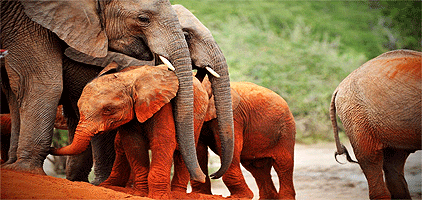
✓ Red Elephants: Massive herds that appear rust-colored from dusting themselves in the iron-rich red soil
✓ Aruba Dam: Built across the Voi River, it is a primary destination for game viewing during the dry season
✓ Mudanda Rock: A 1.6 km whale-backed rock formation that acts as a natural catchment for water, attracting hundreds of animals
✓ Wildlife “Red Elephants”: Large herds famous for their reddish hue, caused by dust-bathing in the park’s iron-rich soil. The Big Five: Sightings often include lions, buffalo, leopards, and rhinos. Other frequent sightings include giraffes, zebras, cheetahs, and over 500 bird species.
The reserve is best known for the famous Tsavo lions, but you can spot the other Big Five animals too – leopards, buffalo, rhinos, and elephants. Wildlife sightings include kudus, giraffes, hippos, hyenas, and cheetahs, along with more antelope species.
What is Included
✓ Entrance Fees: National Park entrance fees
✓ Guides: Services of a professional English-speaking driver-guide
✓ Meals: Lunch at a lodge and bottled mineral water during the drive
✓ Transport: Round-trip from Mombasa in a vehicle with a pop-up roof
Travel checklist
✓ Gear: Camera (extra batteries), binoculars, and power bank
✓ Protection: Sunscreen, sunhat, sunglasses, and insect repellent
✓Essentials: Personal medications, refillable water bottle, and cash for tips
✓ Clothing: Lightweight, neutral-toned breathable clothing; a light scarf is recommended for dusty roads
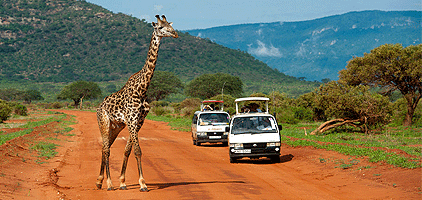
Mombasa Day Trips: A 1 Day Safari to Tsavo East National Park is a quick, affordable getaway from Mombasa. Tsavo East National Park is 173 km northwest of Mombasa (approximately 2½ hours drive from Mombasa) and was established in 1948, covering 11,747 km².
Key attractions include the Galana River and the Yatta Plateau, as well as several pools and dams that serve as watering holes for birds and animals. Its relative closeness to the beaches and tourist attractions around Malindi and Mombasa makes it an ideal one-day wildlife safari destination for those who do not want to stay overnight.
Before the sun rises, you will be picked up from your hotel and depart by road (along the Mombasa – Nairobi highway) to Tsavo East National Park. You will enter Tsavo East National Park via Bachuma Gate.
From here, you begin your game viewing, searching for wildlife. The park has many animals, including large herds of giraffe, gazelle, hartebeest, and zebra, as well as the “Big Five” must-see animals – buffalo, African elephants, lions, rhinos, and leopards.
Lunch will be served at one of the safari lodges within the park. After lunch, another game drive follows.
Your game viewing ends in the afternoon, and you will return to Mombasa, arriving late evening.
Mombasa Day Trips Tsavo East National Park 1 Day Safari Itinerary
0600 Hours: Before sunrise, you will be picked up from your hotel and depart by road (along the Mombasa – Nairobi highway) to Tsavo East National Park.
0900 Hours: Arrive at Tsavo East National Park and enter via Bachuma Gate. During your game drive you may see the following; buffalo, cheetah, elephant, giraffes, hartebeest, hyenas, leopard, lion, monkey, rhino, and zebra amongst others.
Other Tsavo East National Park attractions include; Lugard’s Falls a series of rapids on the Galana River where crocodiles love to bathe. Yatta Plateau is the world’s longest lava flow at 290 kilometers long.
Mudanda Rock is a 1.6 km outcrop of rock, with a dam at its base. This is a popular drinking place for wild animals.
Aruba Dam also attracts animals and birds looking for a place to drink. Bird-watching is best between October and January, with many migratory birds.
Over 500 bird species have been recorded in the park, including ostriches, kestrels, buzzards, starlings, weaverbirds, kingfishers, hornbills, secretary birds, and herons.
1300 Hours: Enjoy your lunch box at a picnic site or have a hot lunch at Voi Safari Lodge, Ashnil Aruba Lodge within the park. After lunch, another game drive will follow.
1530 Hours: Your game viewing ends in the afternoon when you exit the park and begin your return trip to Mombasa Island.
1830 Hours: Arrive in Mombasa and drop you off at your hotel/ residence.
Mombasa Day Trips Tsavo East National Park 1 Day Safari Prices
Mombasa Day Trips Tsavo East National Park 1 Day Safari Rates Include:
✓ Extended Game Drives in the park
✓ Professional English-speaking driver-guide
✓ Buffet Lunch at one of the hotels in the Park
✓All entry fees, driver-guide fees, service charges, and taxes
✓ Mombasa Day Trips Tsavo East National Park 1 Day Safari & Pickup from your hotel in Mombasa and drop-off at your hotel
| Dates From | Dates To | Price Per Person | Children Aged 3 to 12 Years |
|---|---|---|---|
| 1st January 2026 | 31st December 2026 | Request for rates | Pay 75% of the Adult Rate |
Notes
* Mombasa – Tsavo East – Mombasa (Round-trip driving distance is 360 km)
* The safari is in a pop-up roof safari mini-van. You can upgrade to a customized 4 x 4 Safari Land Cruiser at an extra cost
* Our Tsavo East National Park 1-Day Safari pick-up time: (South Coast and Diani beach hotels: 0400 hours) & (Mombasa and North Coast hotels: 0500 hours)
* Safari begins and ends at Mombasa Port, Mombasa City, Nyali beach resorts, Tiwi beach resorts, Shanzu beach resorts, Kilifi beach resorts, Galu beach resorts, Bamburi beach resorts, Msambweni beach resorts, Diani beach resorts, etc
Tsavo East National Park 1-Day Safari Rates Do Not Include:
* Drinks
* Tips or gratuity
* Travelers Insurance
* Communication charges
* Visas, international airfares, and airport taxes
* Sightseeing not included in the package; optional activities
* Personal expenses such as transfers to/ from the airport (supplement airport transfer cost applies for tours starting from the airport)
Booking & Reservations, Mombasa Day Trips Tsavo East National Park 1 Day Safari, Contact
Mobile: +254-721-242-711
WhatsApp: +254-721-242-711
Reservations: +254 718-179-967
Email: [email protected]
Website: https://africanspicesafaris.com